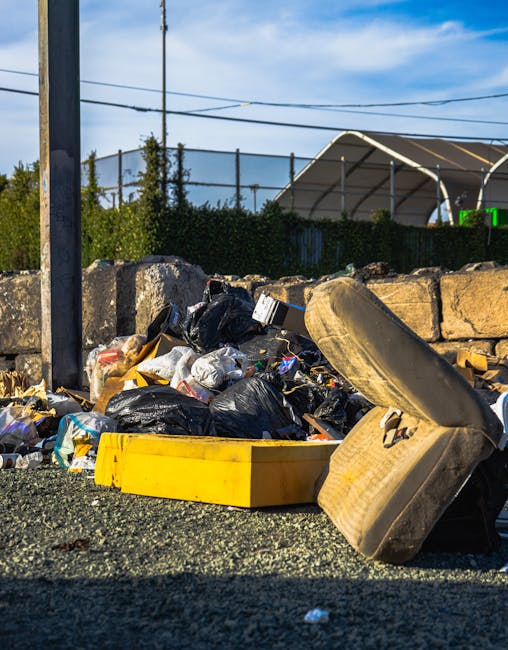
Bulky waste in SW6: Sofa disposal and council fines
Posted on 02/06/2026
If you are dealing with bulky waste in SW6, especially a sofa that has seen better days, it is easy to underestimate how quickly a simple clear-out can turn into a messy, expensive problem. A broken two-seater left by a communal bin, or an old corner sofa shoved outside "just for a night", can attract complaints, delay property handovers, and, in some cases, lead to council fines. Not ideal. This guide breaks down sofa disposal in SW6 in plain English, so you can handle it properly, avoid unnecessary stress, and choose the safest route for your home, rental, or business.
We will cover what bulky waste means, how sofa disposal usually works, what the real risks are, and how to decide between collection, reuse, recycling, or removal support. You will also find a practical checklist, a comparison table, and a few real-world pointers that help when time is tight. If your clear-out is part of a move, the advice here pairs well with pre-move decluttering guidance and a practical packing guide.
Expert summary: the safest approach is usually the one that keeps the pavement clear, follows local collection rules, and gets the sofa to the right destination first time. That can mean a council booking, a reuse route, or a professional removal team. The wrong approach can be surprisingly costly for something that started as "just an old sofa".
Why Bulky waste in SW6: Sofa disposal and council fines Matters
SW6 is a busy part of London, and that matters because bulky waste is not just "stuff outside the house". A sofa left on the street can block footways, create an eyesore, and become someone else's problem very quickly. In shared blocks and narrow streets, one abandoned three-seater can be enough to trigger complaints from neighbours, managing agents, or the council. Let's face it, nobody wants to be the person everyone remembers for the wrong reason.
The fines angle is what makes this topic more than just a tidiness issue. Local authorities generally expect residents to dispose of bulky items through approved collection or take-back routes, or to use a licensed waste carrier. If a sofa is dumped irresponsibly, even if your intention was simply to "leave it out for collection", enforcement can become a real concern. The exact response depends on the circumstances, but the risk is there, and it is avoidable.
There is also a wider practical reason to take bulky waste seriously in SW6: time pressure. Many people are clearing a flat before a tenancy ends, preparing a property for sale, or making room during a move. In those moments, a sofa disposal plan can save hours, protect your deposit, and keep the whole process calm instead of chaotic. If your move also involves furniture, it can help to compare your options with furniture removal support and the broader services overview.
Key point: the safest sofa disposal is the one that is arranged before the sofa becomes a street problem. Once it is outside improperly, the risk profile changes fast.
In practice, bulky waste rules protect shared streets, bin stores, and access routes. That is especially relevant in SW6 where many homes have limited storage, stair access, or permit-sensitive parking. A sofa does not magically become "less bulky" just because the lift is broken or the back gate is narrow. Annoying, but true.
How Bulky waste in SW6: Sofa disposal and council fines Works
Bulky waste normally refers to large household items that will not fit in standard bins or normal kerbside collections. Sofas, armchairs, sofa beds, mattresses, wardrobes, and large tables are classic examples. A sofa disposal process usually starts with deciding whether the item can be reused, repaired, dismantled, collected, or responsibly recycled.
In simple terms, you usually have four routes:
- Council bulky waste collection: useful when the item is accepted and you want a straightforward pickup, subject to local booking rules.
- Reuse or donation: sensible if the sofa is clean, structurally sound, and fit for someone else to use.
- Private removal or waste collection: often helpful when access is tricky, timing is tight, or you have multiple items.
- Self-delivery to a facility: possible for some people, though not always practical in SW6 because of vehicle size, loading, and time.
The council fines issue usually appears when people skip the proper route. Common mistakes include leaving a sofa beside communal bins, placing it on the pavement without booking a collection, handing it to an unlicensed operator, or assuming that a pile of furniture will be "gone by morning". In reality, if it is still your waste and it is not collected properly, responsibility can remain with you until it is legally transferred.
There is a human side to this too. We have all seen that half-hour of optimistic planning before reality sets in: the sofa is heavier than expected, the corridor is tighter than you thought, and the person who promised to help has mysteriously vanished. That is usually the moment a sensible disposal plan starts looking very attractive.
If the sofa is part of a larger flat clearance, it can help to combine the work with moving-day planning advice and flat removal support. That way, you are not solving waste disposal in isolation; you are managing the whole exit process properly.
Key Benefits and Practical Advantages
Doing bulky waste properly is not just about avoiding trouble. It also makes the rest of the day easier, cleaner, and less frantic. One tidy decision can save a surprising amount of energy.
- Lower risk of fines or complaints: a booked, traceable route is far safer than a sofa left on the pavement.
- Cleaner communal areas: hallways, front steps, and bin stores stay usable for neighbours and building staff.
- Less physical strain: sofas are awkward, heavy, and often need two people or the right equipment.
- Better time management: you avoid that awkward "who is taking this?" back-and-forth on the day of departure.
- More recycling potential: a responsible route gives materials a better chance of being recovered or reused.
There is also a financial angle beyond fines. If you are moving out, a sofa left behind can affect cleaning, access, and final checks. If you are preparing a rental or sale, delays on bulky waste can slow photography, maintenance, and viewings. For people storing furniture temporarily, it may make sense to look at storage options or read the company's recycling and sustainability information before choosing a route.
And yes, there is a peace-of-mind benefit. You know the item is dealt with. No guessing. No "we'll sort it later". No waking up to an angry note from the building manager. Simple, really.
Who This Is For and When It Makes Sense
This topic matters to a wide range of people in SW6, not only landlords or property managers. If you own, rent, or help manage property, bulky waste can appear at exactly the wrong moment.
You may need this if you are:
- moving out of a flat and need a sofa removed before checkout
- replacing furniture and do not have a back garden or garage for temporary storage
- clearing a room after a breakup, bereavement, or house reshuffle
- managing a student move with limited time and several items to shift
- dealing with access issues such as stairs, small lifts, or permit-only parking
- trying to avoid a communal-area dispute in a block of flats
It also makes sense when the sofa is simply too awkward to move alone. A bulky recliner, a corner sofa, or a sofa bed can catch on stair corners, scuff walls, and strain your back in seconds. If you have ever tried to pivot one of those down a narrow hall, you will know exactly what I mean. The sofa always looks smaller in the room than it does in the doorway.
Students and younger renters often underestimate the timing issue. A sofa disposal plan should ideally happen before the last day of the tenancy, not during the final hour when keys are due back and the hallway is full of boxes. For those situations, student removals support and man and van help can be a sensible fit.
If the item is still usable, there is also the reuse-first question. A sofa in decent condition may be better diverted into a second life rather than treated as pure waste. That is often the most sensible route, morally and practically.
Step-by-Step Guidance
Here is a straightforward way to approach sofa disposal in SW6 without overcomplicating it.
- Check the condition of the sofa. Is it reusable, repairable, or genuinely at end of life? A clean, stable sofa is often suitable for reuse; a collapsed frame or severe contamination changes the plan.
- Measure access. Look at doors, stairs, corners, lifts, and street parking. A sofa that fits in theory may still be a nightmare in practice.
- Choose the route. Decide whether the item should go to a council collection, a licensed removal provider, storage, or a reuse channel.
- Confirm timing. Book early if there is a collection window. If you are under pressure, same-day help may be worth exploring through same-day removal support.
- Prepare the sofa. Remove cushions, loose covers, blankets, and anything hidden in the frame. Clean it lightly if it may be reused.
- Protect the route out. Use floor protection, door guards, or blankets if the furniture has to pass through tight spaces.
- Move or hand over safely. Make sure the item is transferred to the agreed service or destination, not left in a common area "for later".
- Keep records if needed. For rentals or managed properties, a short note, booking confirmation, or receipt can help resolve any future question.
A small but important detail: if you are dealing with several pieces, group the work. Do not tackle the sofa, then stop, then come back to a chair, then a table. Momentum matters. And so does not losing your patience halfway through.
When the sofa is part of a wider move, reading home cleaning and preparation advice can help you line up disposal, packing, and final clean in one practical sequence.
Expert Tips for Better Results
Over the years, the best outcomes usually come from small, sensible decisions rather than heroic lifting. To be fair, "heroic lifting" is often how people end up with a sore back and a dented wall.
1. Don't wait until the last day. The later you leave sofa disposal, the fewer good options you tend to have. Booking early gives you flexibility and reduces stress if access is awkward.
2. Treat access as a real factor. In SW6, stairwells, basement flats, and permit-managed streets can be more of a challenge than the sofa itself. If access is tight, a professional team may be the cleaner choice.
3. Think about dismantling carefully. Some sofas can be broken down into sections, but not all. Forced dismantling can damage the frame and make handling worse. If you are unsure, that is a good place to pause.
4. Keep the path clear. A tiny rug, a shoe rack, or a low table can become a trip hazard when you are turning furniture. Clear the route before anyone starts moving.
5. Use the right lifting habits. Bend your knees, keep the load close, and avoid twisting under pressure. If you want a deeper look at safer handling, this lifting techniques guide and heavy lifting tips are useful background reading.
6. Match the service to the job. One sofa in a ground-floor flat is not the same as three items from a top-floor maisonette. If the job is bigger, broaden the plan. A general removal service may be more practical than a last-minute ad hoc solution.
7. Be honest about condition. A sofa with broken springs, stains, or pests is not a "maybe reusable" item. Honest classification saves time and avoids failed handovers.
One real-world observation: the properties that go most smoothly are not always the tidiest. They are the ones where someone has made the awkward decisions early. That is the trick, really.
Common Mistakes to Avoid
Most sofa disposal problems are predictable. That is the frustrating part. The good news is they are avoidable if you know what to look for.
- Leaving the sofa outside without a booking: this is the big one. It looks like a quick fix and can become a compliance issue.
- Assuming someone else will remove it: unless the handover is confirmed, the sofa is still your responsibility.
- Using an unlicensed collector: if the waste goes to the wrong place, the original owner can still face questions later.
- Forgetting building access rules: some blocks need booked lift slots, concierge approval, or advance notices for removals.
- Trying to move a sofa alone: this is where back strain and wall damage often happen. Not worth it.
- Not checking whether the sofa can be reused: useful furniture sometimes gets binned too quickly.
- Leaving it until the tenancy end: by then you are often racing the clock, which never helps.
There is also a subtle mistake people make: they think "bulky waste" and "rubbish" mean the same thing in every situation. They do not. A usable sofa, a damaged sofa, and a contaminated sofa may each need a different route. That distinction matters more than people expect.
If your route out involves stairs or awkward access, it may be worth reading access advice for tight moves. The principles are similar, even if the street layout changes.
Tools, Resources and Recommendations
You do not need a truck full of kit to manage sofa disposal well, but a few basic tools make life easier.
| Item | Why it helps | Best for |
|---|---|---|
| Furniture blankets | Protects walls, doors, and the sofa during removal | Stairwells, narrow corridors, shared entrances |
| Gloves with grip | Improves control when carrying fabric or wood frames | Most basic sofa moves |
| Measuring tape | Confirms whether the sofa can fit through exits | Flats, maisonettes, tight hallways |
| Ratchet straps or ties | Keeps sofa sections secure if it has been dismantled | Vehicle loading and transport |
| Protective floor covering | Reduces damage and dirt during the move-out route | Managed properties and end-of-tenancy clearances |
For readers comparing disposal and removal support, the most useful resources are often the ones that explain the full moving process rather than just the sofa itself. Packing guidance, decluttering advice, and the company's pricing and quotes information can help you make a better decision before you commit.
If you want to check the provider's approach to handling and safety, it is sensible to review their health and safety policy and insurance and safety details. Those pages matter more than people think, especially when furniture is large or access is awkward.
Law, Compliance, Standards, or Best Practice
When bulky waste in SW6 is handled badly, the issue is rarely the sofa itself. It is usually about duty of care, nuisance, obstruction, or irresponsible disposal. In everyday terms, that means you should make sure the item is handed over through a legitimate route and not dumped where it becomes someone else's problem.
Best practice in the UK context generally means:
- using a recognised collection or disposal route
- checking whether the item can be reused before it is treated as waste
- not placing furniture on the highway or beside bins without permission
- confirming that the person taking the item is properly set up to handle waste
- keeping some proof of handover where that is sensible
That last point is especially useful for landlords, tenants, and managing agents. If there is ever a dispute about who left what, a small amount of documentation can save a lot of back-and-forth. No one enjoys that conversation at 9:00 on a Monday.
Compliance also intersects with sustainability. Reuse and recycling are not just nice extras; they are often the smarter operational choice. If the sofa is sound enough for another home, diverting it can reduce waste and avoid unnecessary disposal pressure. For a broader company view, their recycling and sustainability approach is worth a look.
If you are working in a building with rules about lift bookings, concierge approval, or access slots, follow them. They may feel like a nuisance when you are in a hurry, but they exist for a reason. In a tall block with narrow access, one rushed move can disrupt everyone.
Options, Methods, or Comparison Table
Choosing the right sofa disposal method depends on condition, urgency, access, and budget. Here is a practical comparison.
| Method | Best for | Pros | Trade-offs |
|---|---|---|---|
| Council collection | Standard bulky items with time to book | Structured, familiar, usually straightforward | May have booking windows and access requirements |
| Reuse or donation | Clean, usable sofas in decent condition | Waste reduction, second life for the item | Not suitable for damaged or heavily worn furniture |
| Private removal service | Awkward access, multiple items, short timelines | Flexible, hands-on, often easier in flats | Cost varies by job size and complexity |
| Self-transport | Smaller, manageable jobs with access to a vehicle | Direct control, useful for nearby drop-off | Manual effort, loading risk, time-consuming |
For many SW6 households, the most practical route is a hybrid one: check whether the sofa can be reused, then use a removal team if access is tight or the timing is awkward. If the job is part of a bigger clear-out, a man with a van or removal van option can be the neatest fit.
There is no universal winner. The best method is the one that fits your actual situation, not the one that looks cheapest on paper for five minutes.
Case Study or Real-World Example
A typical SW6 scenario goes something like this. A tenant is moving out of a first-floor flat near a busy residential street. The sofa is a large two-seater with a slightly bent frame, so it is not really donation-friendly. The lease end is close, the hallway is narrow, and the building has shared access. The tenant thinks about leaving the sofa near the bin store, but the managing agent has already warned residents about abandoned furniture.
The better approach is simple: measure the exit, arrange a removal slot, and move the sofa out in a controlled way. Cushions are removed first, corners are protected, and the item is carried with two people rather than dragged. The sofa is then taken away in one trip, with no lingering mess, no complaints, and no awkward message from the building office the next morning. Honestly, that last part matters more than people admit.
In another case, a landlord preparing a rental for new photos has a sofa that is still in good condition but no longer matches the property. Instead of dumping it, the team checks whether it can be reused. If it can, great. If not, it is removed cleanly with the rest of the furniture. That saves time, looks better for the property, and avoids a last-minute scramble.
These are small decisions, but they compound. In property moves, the calm jobs are almost always the planned ones.
Practical Checklist
Use this checklist before you move or dispose of a sofa in SW6.
- Confirm whether the sofa is reusable, repairable, or waste.
- Measure doors, hallways, stairs, and lift access.
- Check whether a council collection or booked removal is needed.
- Make sure the route out of the property is clear.
- Protect walls, floors, and door frames.
- Remove cushions, throws, and loose fittings.
- Confirm parking or access arrangements for the collection vehicle.
- Keep proof of booking or handover if relevant.
- Do not leave the sofa on the pavement or by bins unless instructed to do so.
- Make sure the item goes to the agreed destination, not "somewhere later".
Quick reminder: if the sofa is heavy, awkward, or going down stairs, ask for help. It is a lot cheaper than a strained back or a damaged wall.
Conclusion
Bulky waste in SW6 is one of those topics that looks minor until it becomes urgent. A sofa is not just a sofa when it is blocking a corridor, delaying a move, or sitting outside a building where it could trigger a complaint. The practical answer is to plan ahead, choose the right route, and keep the process tidy from start to finish.
If you take one thing from this guide, let it be this: the safest sofa disposal is the one you arrange deliberately, not the one you improvise at the end of a long day. That small shift in planning protects your time, your budget, and your peace of mind. And to be fair, those are the things people really want.
If you are also managing a larger move or clearing multiple rooms, it may help to review removals support, house removal options, or packing help and supplies so the sofa is just one part of a clean, manageable plan.
Get a free quote today and see how much you can save.
Sometimes the simplest clear-out is the one that starts with a proper plan and ends with an empty room, a clear hallway, and a quiet sense of relief. Nice, that.