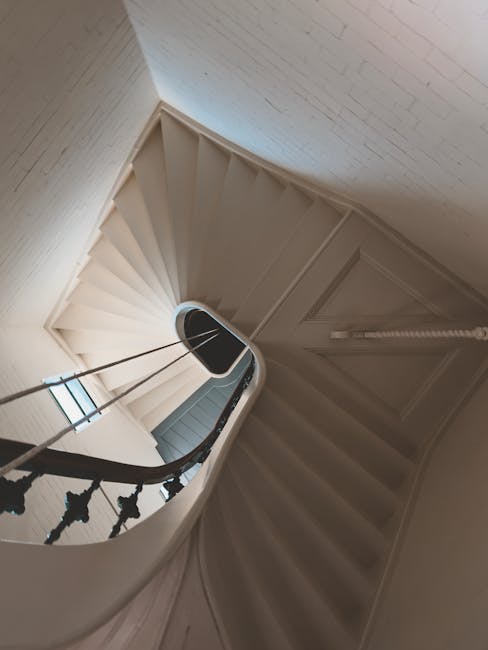
Tight Victorian Stairs in Parsons Green: Moving Solutions
If you've ever stared at a narrow Victorian staircase and thought, "How on earth is the sofa meant to get up there?", you're in the right place. Tight Victorian stairs in Parsons Green can turn an ordinary move into a careful, slightly awkward, and very real logistical puzzle. The good news? There are practical moving solutions that make the job safer, calmer, and far less stressful.
In Parsons Green, lots of homes have charming period features: curved banisters, steep steps, awkward turns, and hallways that feel narrower once a mattress is in the room. That's lovely on a Sunday afternoon. Less lovely on moving day. This guide walks you through what makes these stairs tricky, how professional movers handle them, which techniques work best, and what to avoid if you want your furniture, walls, and back to come through unscathed.
We'll keep it plain English, local, and useful. No fluff. Just the kind of detail that helps when you're standing in the hallway at 8:15am, wondering whether the wardrobe will fit or whether it's time for plan B.
Table of Contents
- Why Tight Victorian stairs in Parsons Green: Moving solutions Matters
- How Tight Victorian stairs in Parsons Green: Moving solutions Works
- Key Benefits and Practical Advantages
- Who This Is For and When It Makes Sense
- Step-by-Step Guidance
- Expert Tips for Better Results
- Common Mistakes to Avoid
- Tools, Resources and Recommendations
- Law, Compliance, Standards, or Best Practice
- Options, Methods, or Comparison Table
- Case Study or Real-World Example
- Practical Checklist
- Conclusion
- Frequently Asked Questions
Why Tight Victorian stairs in Parsons Green: Moving solutions Matters
Victorian staircases were not designed around king-size divan bases, chunky wardrobes, or wide modern appliances. That's the blunt truth. The turn from the hallway into the stairs can be sharp, the landing may be tiny, and the handrail can eat into the space you need for an awkward lift. One wrong angle and suddenly you're stuck, sweating, and trying not to chip plaster that has probably been there for a century.
That matters for three reasons. First, safety: lifting a heavy item through a narrow stairwell increases the risk of strains, drops, and trips. Second, property protection: walls, corners, skirting boards, and railings are vulnerable. Third, time and money: if you have to dismantle something at the last minute, or carry it back down and rethink the whole move, the cost of delay can climb quickly.
For local moves, especially in Parson Green and surrounding SW6 streets, access is often the biggest hidden factor. People tend to budget for distance, van size, and labour, but not for the staircase itself. That's where proper moving solutions make a noticeable difference. In our experience, the homes that go smoothly are the ones where the stairs were assessed before anything heavy was moved.
Expert summary: narrow Victorian stairs are rarely a problem if they're treated as an access challenge, not a brute-force challenge. Measure first, protect the route, reduce item size where possible, and choose the lifting method to fit the stairwell, not the other way round.
How Tight Victorian stairs in Parsons Green: Moving solutions Works
The process is really about breaking a difficult move into smaller, safer decisions. Instead of trying to carry everything exactly as it sits in the room, you plan the route, identify the pinch points, and adapt the furniture or the loading method before the carrying begins.
A good approach usually follows a sequence like this:
- Assess the access - measure stair width, landing space, ceiling height, and any tight turns.
- Match the item to the route - decide whether it can go upright, on an angle, or after partial dismantling.
- Protect the property - use covers, blankets, edge protection, and floor runners where needed.
- Assign roles - one person leads, one supports, and nobody rushes the turn.
- Move with control - slow, steady, and communicated clearly. Loud guessing helps no one.
If the item is bulky but not especially fragile, movers may tilt it to gain clearance. If it's fragile, they'll prioritise stability and cushioning. And if the staircase is too awkward, the solution may be to disassemble the item, use a different entry point, or move it through a window or balcony where appropriate and safe. That last part needs proper planning, not improvisation at the bottom of the stairs while someone is already halfway in the air.
For residents who are preparing early, pairing access planning with pre-move decluttering can make the whole job easier. Fewer items means fewer decisions, fewer awkward lifts, and less time spent wrestling with furniture that perhaps should never have survived the first flat in the first place.
Key Benefits and Practical Advantages
The biggest benefit is simple: fewer surprises. Once you've dealt with a few tight staircases, you learn that planning is the real labour-saving trick. Not muscle. Planning.
- Reduced damage risk: stairs, walls, bannisters, and furniture all stay in better shape.
- Safer lifting: controlled movement lowers the chance of slips, twisted backs, and dropped loads.
- Less stress: you're not making decisions under pressure while everyone's blocking the landing.
- Better time management: when the route is mapped out, loading and unloading go faster.
- More furniture saved: some pieces can be moved intact rather than being forced, scratched, or partially dismantled in a panic.
There's also a practical commercial benefit. If you're comparing movers, those who understand stair access tend to give more realistic advice about crew size, timing, and vehicle choice. That can prevent the classic "it looked easy in the quote, but not on the day" situation. And let's face it, nobody wants that email chain.
For larger household pieces, it's often worth reading guidance on moving a bed and mattress efficiently and storing a sofa properly when space is tight. Those two items alone are responsible for plenty of awkward stairwell drama in period properties.
Who This Is For and When It Makes Sense
This is for anyone moving in or out of a Victorian flat or house in Parsons Green where the stairs are narrow, steep, curved, or simply not designed for modern bulky furniture. That includes tenants, homeowners, landlords preparing a changeover, students moving into split-level accommodation, and small offices in older buildings with internal stair access.
It makes sense when:
- you have oversized furniture, such as wardrobes, sofas, beds, or pianos
- you're moving alone or with limited help
- the stairwell has a tight bend or very short landing
- your items are valuable or fragile
- you need to avoid damage in a rental property
- you're working to a tight schedule and cannot afford delays
Students and renters often underestimate how much a staircase affects the move. A one-bed flat might look straightforward on paper, but if the sofa cannot pivot on the landing, the whole operation changes. In those cases, it can be smart to combine access planning with student removals in Parsons Green or flat removals for Parsons Green homes, because the service model tends to fit the property type more closely.
If the move is urgent, same-day options can also help. Not every move is beautifully planned weeks in advance. Sometimes a clearance or tenancy deadline drops on your lap, and you need the practical version of "make it happen" rather than a perfect spreadsheet.
Step-by-Step Guidance
Here's a practical way to handle a move involving tight Victorian stairs without turning the day into a rescue mission.
1. Survey the route before touching the furniture
Walk the full route from room to van. Check the doorway, hall, stairs, corners, and final exit. Look at ceiling height near the bend; this is where people get caught out. If you can, measure the widest and narrowest points. Even rough measurements help.
2. Decide what needs dismantling
Many items move better in sections. Bed frames, shelving, table legs, and some sofas can be reduced in size. It sounds obvious, but people often leave this until the item is already wedged at the bottom of the stairs. That is not the ideal moment.
3. Clear the stairwell completely
Remove mats, coats, plant pots, shoes, and anything that narrows the path. If the stairs have a delicate runner or polished finish, protect it. A clear stairwell is a safer stairwell, and the movement feels more controlled immediately.
4. Pack with the staircase in mind
Heavy items go in smaller loads. Fragile items get better cushioning. Boxes should be sealed properly, not overfilled, and marked clearly. It's also worth checking that your packing method matches the route; a box that is technically liftable may still be horrible on a tight turn. For practical help, see the packing guide for a smoother move.
5. Use the right carrying technique
One person should lead from the top or bottom depending on visibility and control. Communicate every turn. Short commands work better than chatter. If something feels off-balance, stop and reset. A 10-second pause is cheaper than a damaged banister.
6. Protect the vulnerable edges
Blankets, corner guards, and wraps can make a huge difference. Period homes often have characterful but unforgiving features. One scrape on a painted wall can become a whole afternoon of apologising. Nobody enjoys that.
7. Have a fallback plan
If the item will not safely pass, do not force it. Alternative plans might include further dismantling, moving it through a different entrance, or storing it temporarily. For example, if a large piece can't be placed immediately, storage in Parsons Green may be the calmer option while access is sorted.
The key thing is not to confuse movement with progress. Sometimes the smartest move is to stop, rethink, and choose a safer route. That's not failure. That's just experience doing its job.
Expert Tips for Better Results
After enough moves through old London stairwells, a few habits become non-negotiable.
- Measure the awkward pieces first: sofas, mattresses, wardrobes, and desks usually create the issue, not the boxes.
- Take doors off hinges where appropriate: a few extra centimetres can change everything.
- Move early in the day: the staircase feels easier when everyone is fresh, and the light is better.
- Keep hands clean and grips dry: a tiny slip can become a real problem with polished wood or paint.
- Use a leader and a spotter: one person calling the movement prevents confusion.
- Don't overpack boxes: a box of books is a classic beginner mistake. Heavy and awkward. Brutal, really.
- Keep communication short: "hold", "tilt", "pause", "down" works better than a long explanation mid-carry.
A useful local detail: in Parsons Green, some buildings have shared entrances or narrow communal access points. If you're moving from a maisonette or basement flat, the route from front door to staircase may be just as tricky as the stairs themselves. Plan both. Too many people only focus on the steps.
If you're moving especially heavy or awkward pieces, it can help to review safe lifting technique guidance and practical ideas for handling heavy lifting. They're not magic, of course, but they do reduce the chance of doing something daft with your lower back.
Common Mistakes to Avoid
Some mistakes show up again and again. The frustrating part is that they're usually avoidable.
- Assuming the item will "just fit": stairs are unforgiving. Measure first.
- Forcing a piece through a turn: if it catches, stop. Forcing it rarely ends well.
- Ignoring wall protection: Victorian plaster can mark surprisingly easily.
- Packing boxes too densely: weight builds fast, and one heavy box becomes three problems.
- Not checking ceiling clearance: the staircase width is only half the story.
- Leaving dismantling tools until the last minute: screws, Allen keys, and tape should be ready before the item is in motion.
- Moving without a clear lead: two people giving directions at once is chaos with shoes on.
Another common issue is underestimating furniture removal complexity. A wardrobe might be easy to lift, but the angle through the stair bend tells a different story. If you know you have larger or awkward furniture, it's worth thinking in terms of furniture removals in Parsons Green rather than a generic move-and-go approach.
And a small but important note: if something seems unsafe, don't be heroic. There's always a slightly awkward moment where somebody says, "We can manage it." Sometimes they can. Sometimes they really, really can't.
Tools, Resources and Recommendations
You don't need a warehouse full of specialist kit, but the right basics help more than people expect.
| Tool / Resource | Why It Helps | Best Use |
|---|---|---|
| Furniture blankets | Protects surfaces and reduces scuffs | Wrapping sofas, tables, and cabinets |
| Corner guards | Helps shield walls and door frames | Narrow stair turns and landings |
| Ratchet straps | Keeps loads stable | Moving items between lift points |
| Gloves with grip | Improves handling | Carrying boxes or awkward furniture |
| Basic tool kit | Useful for dismantling | Bed frames, shelves, flat-pack units |
| Floor protection | Reduces wear and scratches | Hallways and stair treads |
Beyond equipment, the most useful resource is a clear plan. That includes route notes, measurements, and a realistic view of what can be moved intact. If you're comparing service levels, a well-explained services overview can help you judge whether a mover is used to access-heavy jobs or just standard point-to-point transport.
If you're moving on a tighter timeline, you may also want to read about keeping the wider house move under control or what to expect from same-day emergency clearances. Those situations tend to reward decisiveness. A lot.
Law, Compliance, Standards, or Best Practice
For a domestic move, the main issue is not legal complexity; it's safe practice. That said, there are still sensible UK expectations to keep in mind. Movers and householders both have a duty to avoid preventable injury and damage. If a stairway is unsafe, overloaded, or obstructed, the right response is to pause and reduce the risk.
Best practice usually includes clear communication, reasonable manual handling, appropriate equipment, and not asking people to carry more than they can manage. Insurance is another part of the picture. It's worth checking what protection is included for accidental damage, especially in period homes where scuffs show quickly and repairs can be fiddly.
If you're booking a professional team, it's reasonable to ask about health and safety processes, insurance cover, and how they handle awkward access. That's not being difficult. It's being sensible. The better operators expect those questions.
For more on this side of the move, you can also review health and safety expectations and insurance and safety information. If you want a broader sense of how the business approaches trust and responsibility, about the company is useful too.
Options, Methods, or Comparison Table
Not every stair problem needs the same answer. Here's a straightforward comparison of the most common approaches.
| Method | Best For | Pros | Trade-offs |
|---|---|---|---|
| Carry item intact | Smaller or slimmer furniture | Fast, simple, less dismantling | Only works if the route is generous enough |
| Partial dismantling | Beds, shelving, wardrobes, some tables | Improves clearance, safer turns | Needs tools and a bit more time |
| Team carry with protection | General house contents | Good balance of speed and control | Requires communication and coordination |
| Alternative access route | Oversized or fragile items | Can solve impossible stair issues | Needs planning and, sometimes, specialist equipment |
| Temporary storage | Items that can wait | Removes pressure from move day | Adds a second stage to the relocation |
For many Parsons Green homes, the best answer is a mix: dismantle what you can, protect the route, and reserve the challenging pieces for a crew that knows older properties. If you're moving a sofa, for example, the decision might depend on the stair angle, the landing width, and whether the item can pivot at the bend. No drama needed. Just judgement.
Case Study or Real-World Example
Here's a realistic move scenario from the kind we see all the time. A tenant in a Victorian flat near Parsons Green has a two-seater sofa, a double bed, a bookcase, and a washing machine. The flat looks manageable at first glance. Then they walk downstairs and hit the staircase bend: narrow, steep, and awkwardly close to the wall.
The sofa is the first concern. It technically fits in the hallway, but the landing turn is tight. Rather than forcing it, the mover checks whether the feet can be removed and whether turning it on edge improves clearance. It does. The bed frame is dismantled, the mattress is wrapped, and the washing machine is kept upright with careful handling. The bookcase is emptied first, because nobody wants a wobbling tower of novels on a narrow stair.
The move takes longer than a modern straight-stair job, but it stays controlled. No wall chips. No panic. A little grunting, yes, because let's be honest, that's part of moving day. But everything arrives safely.
That kind of planning is exactly why access-aware movers matter. It's not about being flashy. It's about noticing the problem before the problem notices you.
Practical Checklist
Use this before move day or before the first heavy item leaves the room.
- Measure the stair width, landing, and key turns
- Check ceiling height near the bend
- Confirm which items need dismantling
- Empty drawers, shelves, and storage units
- Pack boxes to a manageable weight
- Protect walls, corners, and floors
- Keep tools, tape, and fixings in one labelled bag
- Assign one lead person for communication
- Decide in advance when to stop and rethink
- Arrange storage if any item cannot be moved safely on the day
If you've got bulky pieces or awkward access, don't forget that bulky waste and sofa disposal can become relevant too, especially if an item is no longer worth moving. And if quotes seem unclear, understanding what's included in removals quotes can save a bit of headache later.
Conclusion
Tight Victorian stairs in Parsons Green don't have to make your move miserable. They do, however, demand a more thoughtful approach than a standard stairwell. Once you measure properly, protect the property, and choose the right method for each item, the whole process gets calmer and much more predictable.
The real win is not just getting the furniture upstairs or downstairs. It's getting there without damage, without injury, and without that awful moment where everyone stands silent because the wardrobe has become part of the staircase. A bit of planning goes a long way. Honestly, more than most people expect.
If you're preparing a move in a period property, start with the route, not the van. That one shift in thinking can make everything else easier.
Get a free quote today and see how much you can save.
Frequently Asked Questions
How do movers get furniture up tight Victorian stairs?
They usually assess the route first, then decide whether to carry the item intact, tilt it, or dismantle part of it. In difficult cases, they may use protective covers or an alternative access route.
What is the biggest problem with Victorian staircases during a move?
The tight turn at the landing is often the main issue. Width, ceiling height, and bannister placement can all reduce usable space more than people expect.
Should I dismantle furniture before moving day?
Yes, if you can. Beds, shelving, and some wardrobes are much easier to move in pieces. It also reduces the chance of getting stuck halfway down the stairs.
Can a sofa be moved through a narrow stairwell?
Sometimes, yes. It depends on the sofa size, the landing turn, and whether feet or arms can be removed. Measuring in advance is the safest way to know.
Is it safe to move heavy items alone on tight stairs?
Usually not. One person can manage some lighter items, but heavy furniture is best handled with help because the stair angle increases the risk of injury and damage.
What should I protect first in a Victorian house move?
Walls, corners, bannisters, and floors. Those are the areas most likely to be marked or scraped during awkward manoeuvres.
How far in advance should I plan access for a Parsons Green move?
As early as possible. Ideally, assess the route before packing is finished so you can adjust furniture, boxes, and crew size if needed.
Do narrow stairs always mean I need professional movers?
Not always, but professional help is a good idea if you have bulky furniture, limited helpers, or fragile items. The risk of damage rises quickly when access is awkward.
What if my furniture will not fit through the staircase?
Don't force it. Consider dismantling more of the item, using a different route, placing it in storage, or replacing it if the cost of moving is no longer sensible.
Are Victorian stair moves more expensive?
They can be, depending on the access difficulty, the amount of dismantling needed, and how many people are required. The important thing is to get a quote that reflects the actual property layout.
Can same-day removals help with tight staircase moves?
Yes, especially if you need a fast clearance or last-minute move. Just be aware that access issues still need to be handled carefully, even when the timeline is short.
What's the safest way to move a mattress on narrow stairs?
Keep it upright or on the most stable angle for the route, use two people if possible, and protect corners and walls. If the stairwell is extremely tight, a professional approach may be the better call.
If you want to explore more practical moving advice, the wider guides on organising and cleaning before relocation and local access advice for Parsons Green streets can also help you prepare with a bit more confidence.